

The Silent Career Killer: Are You Stuck in Execution Mode?

The Silent Career Killer: Are You Stuck in Execution Mode?

Are you working harder than ever but still missing out on promotions?

You consistently deliver, handle tasks efficiently and serve as the go-to person on your team.

Yet, decision-makers continue to overlook you for leadership roles, promotions and strategic projects.

Chances are, you are operating in “execution mode” and staying there without realizing it.

This mindset blocks career growth for many professionals—especially those in mid-career roles.

Execution mode is when you are constantly busy doing the work—solving problems, hitting deadlines and keeping the ship afloat—but not stepping up to strategic thinking or influencing business outcomes.

People see you as reliable and hardworking, but they don’t view you as a strategic leader or decision-maker.

🚨 And here’s the career trap:
Companies don’t promote just doers—they promote thinkers, influencers and strategists.

Here are some signs you are stuck in execution mode:

🔹 You are always working, but leaders don’t notice your efforts.
🔹 You fix problems, but you are not part of key decisions.
🔹 Others move ahead faster, even if they do less.
🔹 Your manager trusts you to finish tasks, but not to lead the team.
🔹 You find it hard to delegate because you want it done right.

If this feels true for you, you are not alone.

Many hardworking professionals face this—especially when they focus only on doing the work.

Being great at execution doesn’t automatically lead to career advancement.


Here’s what tends to happen when you stay stuck:

 You Miss Out on Leadership Development

You are not building skills in decision-makingstakeholder influence or strategic problem-solving—the very skills leaders need.

❌ They Don’t See You as a Strategic Player

You deliver results and handle responsibilities well. Yet, they notice those who influence direction, drive outcomes and think beyond daily tasks. To change that, you need to show your impact, speak up and contribute to bigger goals.

 You Become Replaceable

f your value is based only on completing tasks, you risk being replaced by someone who can do it faster, cheaper or with automation.

You don’t have to stop working hard—but you do need to work differently. Here’s how:

Start asking:

  • Why is this task important to the business?
  • How can you improve this process?
  • Who are the key stakeholders to influence?

Leaders connect execution to business outcomes. You should too.

Don’t just say, “I finished the task.”

Say, “This improved process efficiency by 25% and helped reduce delivery delays.”

Learn to speak the language of business impact.

Train, delegate and trust others—so you can focus on strategyinfluence and vision setting.

People notice leaders as they get involved in high-impact initiatives.


Here’s how to raise your visibility:

  • Volunteer for cross-functional teams
  • Involve in business-critical projects
  • Build relationships with key decision-makers

Stuck in execution mode? The good news is—you can shift gears and become the strategic leader your company needs.

You won’t achieve it by waiting for recognition.

Taking the below initiative leads to real progress.

  • Shift your mindset
  • Communicate impact
  • Build leadership presence
  • Align your actions with strategic outcomes

🎯 Are you ready? Do you want to grow into the leadership role you deserve?

Don’t let execution mode define your career—take the first step toward visibility, influence and leadership by reaching out today.

#CareerGrowth #LeadershipDevelopment #StrategicThinking #LeadershipMindset #BreakTheCareerPlateau #FromDoertoLeader #HighPerformanceHabits #ExecutionToInfluence #LeadWithImpact #UnlockYourPotential #MidCareerProfessionals #StuckInExecuti
Unlocking Mid-Career Growth: The Neuroscience Behind Career Stagnation​

Unlocking Mid-Career Growth: The Neuroscience Behind Career Stagnation​

After 15+ years in your field, you are probably experiencing one of two things:

  1. You have mastered your role, but something feels stagnant.
  2. You are facing unexpected disruptions—layoffs, shifting industries or office politics that make survival feel like a chess game.

At this stage, your career isn’t just about skills; it’s about adaptability. But here’s the problem—your brain is biologically wired to resist change, even when it’s necessary for growth.

Here, we are diving into the neuroscience of career change—the hidden scientific factors behind mid-career transformation and the counterintuitive methods to break free. By the end, you will know how to reprogram your mind for success and why waiting is no longer an option.

And if this hits home, you will want to take immediate action. That’s why we encourage you to connect with us directly—we will help analyse your situation and craft a roadmap to get you unstuck.

Your brain thrives on efficiency, which means it hates uncertainty. The moment your career feels at risk—whether due to automation, leadership changes or a fading sense of purpose—your brain defaults to safety mode. This is called the Status Quo Bias, a cognitive bias that makes you resist change even when change is clearly beneficial.

This is why so many highly skilled professionals remain stuck, even when they know they need to pivot, upskill or change environments.

Neuroscientists have found that fear of the unknown triggers the amygdala—the part of your brain responsible for survival instincts. The problem? Your amygdala can’t differentiate between:

  • A real threat (e.g., job loss, financial crisis)
  • A perceived threat (e.g., fear of failing in a new career move)

This explains why highly competent professionals hesitate to take bold steps.

You must override this fear response by reprogramming your brain’s risk perception. Here’s how:

Your brain loves dopamine, the reward neurotransmitter. The fastest way to get unstuck is to create micro-successes that rewire your brain for action.

Try This:

  • Micro-Pivot Exercise: Instead of planning a complete career overhaul, commit to a 5-minute action (e.g., reaching out to a new connection, attending an industry webinar or drafting an upskilling plan).
  • Repetition Effect: Your brain sees repeated action as safe. The more you take small risks, the easier bigger decisions become.

Harvard research shows that fear and excitement activate the same neural pathways. The trick? Instead of interpreting career uncertainty as a warning, train your brain to see it as a green light for growth.

Try This:

  • Instead of saying, “I’m scared of this career move,” say: “I’m excited about this opportunity.”
  • This simple verbal shift alters how your brain processes uncertainty.

After 15+ years, your biggest challenge isn’t skill—it’s identity inertia. Your brain clings to who you have been, making it hard to step into who you need to become.

  1. Instead of: “I’m an experienced project manager.” Reframe as: “I’m a transformation strategist who leverages project execution for business growth.”
  2. Instead of: “I’m stuck in a saturated job market.” Reframe as: “I have niche expertise that struggling companies desperately need.”

What’s one belief keeping you stuck?

  • “I’m too old to pivot.” (False: Neuroscience shows adults can rewire skills at any age.)
  • “Networking feels transactional.” (False: The best opportunities come from authentic conversations.)

Try This: Identify one limiting belief and replace it with an empowering one. This single shift can redefine your trajectory.

One of the biggest challenges experienced professionals face is analysis paralysis. You have spent years refining your ability to make data-driven decisions, but when it comes to career changes, this habit can work against you.

  • Instead of waiting for the perfect next step, take an action and learn from the results.
  • Research from behavioural science suggests that small, low-risk experiments build confidence faster than waiting for certainty.

Your brain is wired for safety, not transformation—but the most successful professionals are the ones who take action before they feel ready. Understanding the science behind career growth gives you the power to break free from stagnation and step into new opportunities with confidence.

If you are ready to apply these insights to your own career, let’s map out your next steps together.

Your next breakthrough starts with one decision. 🚀

#MidCareerGrowth #CareerStagnation #NeuroscienceAtWork #BrainBasedCoaching #LeadershipDevelopment #CareerReinvention #ProfessionalBreakthrough #ExecutiveCoaching #GrowthMindset #OvercomeStagnation #CareerClarity
#HighPerformanceHabits #ProductivityTips #EmotionalIntelligence #CareerSuccess

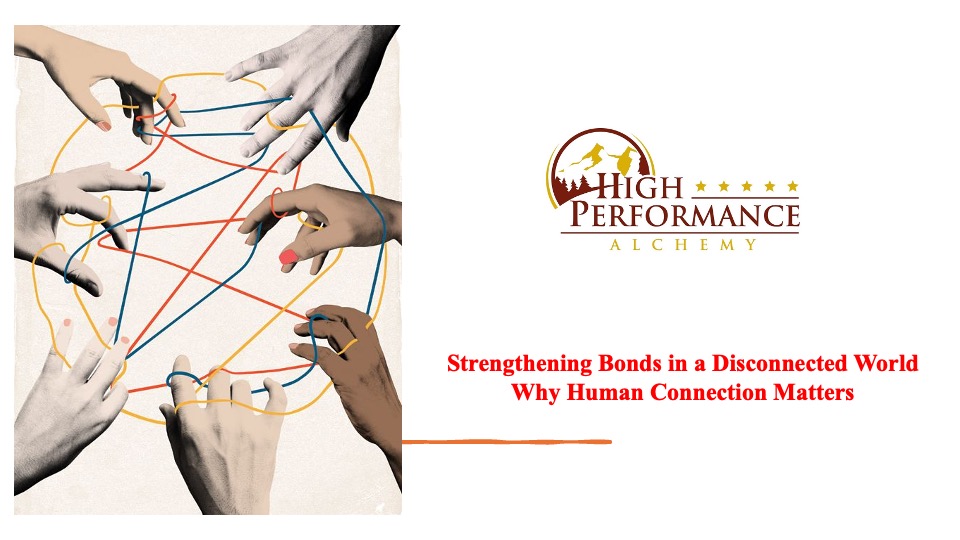
Strengthening Bonds in a Disconnected World

Strengthening Bonds in a Disconnected World

In today’s fast-paced, digitally driven world, human connection has become one of our most undervalued yet essential needs. How often do you truly connect with friends or family? Once a week? Once a month? Or maybe even less? If life’s hustle has pushed relationships to the sidelines, you are not alone—but it’s time to bring them back into focus. Connection matters!

True human connection isn’t just a “nice-to-have”—it’s a must-have for our overall well-being. Whether it’s a heartfelt conversation, a warm hug or shared laughter over coffee, these simple moments have a profound impact on our emotional, mental and physical health.

✅ Emotional Well-Being
Genuine conversations with people who care lighten your emotional load, offering comfort in difficult times and magnifying joy in good ones.

✅ Mental Health Support
Regular, meaningful social interaction reduces stress, eases anxiety and combats feelings of loneliness—especially vital in the post-pandemic era.

✅ Physical Health Benefits
Studies show that people with strong social ties enjoy lower blood pressure, improved immunity and even longer life expectancy.

✅ A Stronger Sense of Belonging
Whether it’s family, friends or a community group, being part of something bigger than yourself fosters purpose and resilience.

With the rise of remote work, social media and online communication, we often confuse digital interaction with real connection. But no number of likes or emojis can replicate the power of face-to-face engagement. The more hyperconnected the world becomes, the more we crave authentic relationships and emotional presence.

When you invest in relationships, it doesn’t just benefit you—it uplifts everyone around you. You become more patient, understanding and emotionally resilient. This positive energy spreads, strengthening not just your own life, but your community too.

🗓️ Schedule Regular Meet-Ups
Block time for relationships just like you would for work. Weekly dinners, monthly catch-ups or yearly reunions—consistency is key.

📵 Be Present and Unplug
Put the phone away. True connection starts with eye contact, attentive listening and being fully in the moment.

💬 Express Gratitude
Tell your loved ones what they mean to you. A simple thank you can nurture emotional closeness.

🥾 Try New Experiences Together
Explore a new trail, attend a workshop or cook a new recipe together. Shared experiences strengthen bonds.

📱 Check In Consistently
Even a short message or five-minute call shows you care. Small, steady efforts matter more than occasional grand gestures.

Yes, life gets busy—but relationships are worth the effort. Prioritizing the people who matter doesn’t just nurture them—it revitalizes you. The joy of laughing together, sharing your thoughts or simply being present with someone—those are the moments that make life meaningful.

Start today. Reconnect with someone who matters. Send that text, make that call or plan that meetup.


As executive coaches and life mentors, we help you prioritize what truly matters—starting with the quality of your human connections.

to schedule a clarity call or learn more about how we can support your growth journey.

#lifecoach #executivecoach #emotionalintelligence #resilience #mentalhealth #workplacestress #connectionmatters #leadershipskills #careergrowth #productivity #humanconnection

Are Meetings Eating Up Your Productive Hours?Are Meetings Eating Up Your Productive Hours?

Are Meetings Eating Up Your Productive Hours?Are Meetings Eating Up Your Productive Hours?

Here’s How Mid-Career Professionals Can Reclaim Productivity—Even When It’s Not in Your Hands

If you are in the thick of your career, juggling deadlines, team dynamics and performance expectations, meetings can often feel like productivity black holes. You start your day with a clear to-do list, only to find it untouched after back-to-back Zoom calls and lengthy discussions.

Sound familiar? You are not alone.

Mid-career professionals face a unique challenge: you are expected to deliver results, influence decisions and collaborate across functions—often without full control over your schedule.

But what if you could turn meetings from time-wasters into productivity enablers?

Here, we will show you how, with actionable strategies tailored to your career stage.

At this point in your career, you are not just executing—you are leading projects, mentoring others and aligning with stakeholders. Meetings come with the territory.

But too many, especially poorly run ones, can eat into your core work time.

Research from Harvard Business Review shows that professionals spend up to 23 hours a week in meetings. The result? Burnout, shallow work and limited innovation.

So, how do you take charge when you are not the meeting owner?

Instead of jumping into meetings reactively, take 1 minute to prepare:

  • What’s my goal in this meeting?
  • How can I add value, not just take notes?
  • Is there a decision I need to influence?

This mindset shift turns you from a passive participant to a strategic contributor.

As a mid-career professional, you often attend meetings led by peers, clients or senior leaders. Here’s how to influence outcomes respectfully:

  • Ask purposeful questions: “Can we clarify the outcome we want before we move forward?”
  • Keep it on track: “Just checking—are we aligned on the next steps here?”

These prompts elevate your presence while guiding the discussion.

Even in long meetings, energy matters. Here’s how to avoid “Zoom fatigue”:

  • Use a notebook to jot down keywords, action items or questions.
  • For virtual calls, try standing for part of the meeting.
  • Engage visually: look into the camera and use gestures to express attention.

When you show up with energy, people notice—and meetings become more meaningful.

Your deep work time is where innovation and real problem-solving happen. To protect it:

  • Block 90-minute focus blocks on your calendar.
  • Decline meetings that don’t need your input—politely and professionally.
  • Use “delay tactics” when needed, e.g., “Can we regroup on this after I review the document?”

The more intentional you are, the more strategic your time becomes.

Here’s a coaching trick that works wonders: the Focus Card.

Write two simple questions on a sticky note or card:

  • What’s the goal of this meeting?
  • What’s the next step?

Place it next to your screen or on your desk. Whether you are in-person or virtual, this visual cue subtly reminds everyone to stay purpose-driven.

Bonus: Share it with your team—it creates a culture of accountability and outcomes.

Don’t just move to the next call. Take 2 minutes to reflect:

  • Did this meeting achieve its purpose?
  • What did I contribute that mattered?
  • What could I do differently next time?

This builds meeting intelligence over time and positions you as someone who values results.

You may not own every meeting, but your influence can ripple across your team or function:

  • Propose “No-Meeting Fridays” or a weekly “Focus Block.”
  • Encourage clear agendas and time-boxed discussions.
  • Recommend decision logs or shared notes.

Your peers will appreciate your leadership—even if you are not their manager.

Meetings don’t have to steal your focus or derail your day. As a mid-career professional, you are in a powerful position to influence how time is used—starting with your own.

By preparing with intention, engaging with clarity and using tools like the Focus Card, you can elevate your effectiveness and model high-performance habits for others.

If you are looking to sharpen your leadership presence and reclaim your productive time, we are here to help. At High Performance Alchemy, we offer 1:1 coaching and training experiences designed for mid-career professionals who are ready to level up.

and let’s explore how you can lead with more clarity—even when meetings pile up.

#ProductivityTips #MidCareerProfessionals #MeetingEfficiency #DeepWork #TimeManagement #CareerGrowth #LeadershipPresence #ProfessionalDevelopment #WorkplaceProductivity #ExecutiveCoaching #FocusStrategies #LeadershipSkills #WorkSmart

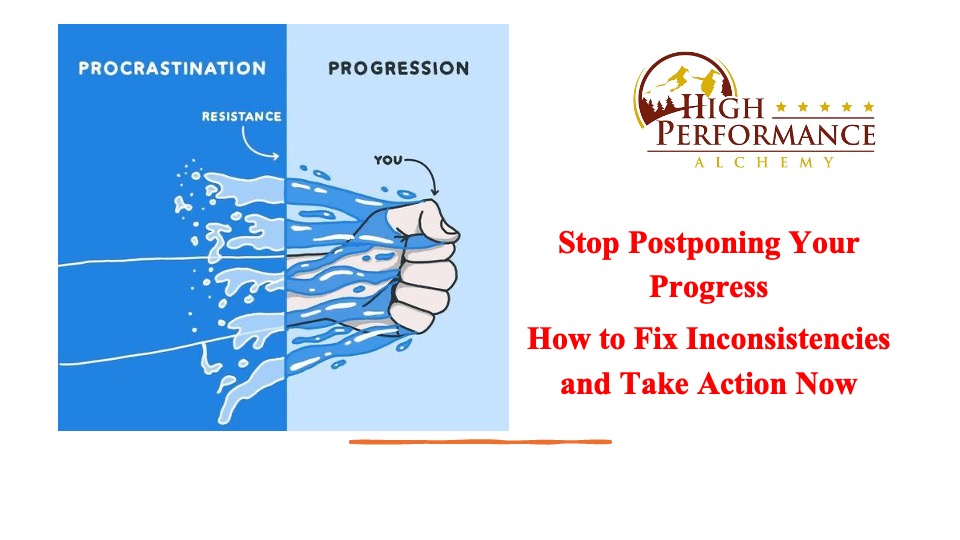
Stop Postponing Your Progress: 7 Ways to Overcome Postponing and Take Action Today

Stop Postponing Your Progress: 7 Ways to Overcome Postponing and Take Action Today

Do you ever feel like you are standing right at the edge of success, but the act of postponing keeps pulling you back?

You have set your goals.

You have made your plans.

Motivation strikes now and then. But still—you hesitate.

You keep postponing.

You tell yourself, “Just one more day. I’ll start tomorrow.” And then, you end up postponing again.

Before you know it, the habit of postponing becomes a quiet thief, stealing your momentum and blurring your dreams. The space between knowing and doing gets filled with delay—and that’s where many dreams fade.

Let’s not let that happen. Let’s stop postponing and start taking action—today.

Before you can overcome inconsistency, you need to understand what causes it. Often, it’s not your goals or your capabilities—it’s the execution. Here are the most common reasons why we delay taking action:

  • Overwhelm: Your goals feel massive and unmanageable.
  • Perfectionism: You wait for the “perfect” moment or ideal conditions that rarely come.
  • Procrastination: Fear of failure (or success) leads you to delay.
  • Lack of clarity: Without a clear path forward, focus becomes fragmented.

Understanding the root cause is step one. Now let’s move to action.

Big goals can be paralyzing. To gain traction, break them into small, actionable steps.

  • Ask: What’s the smallest action I can take today?
  • Break your goal into weekly or daily chunks.

Example: Want to write a book? Don’t aim to complete it this month. Start with one paragraph. Then one page. Then one chapter. Momentum comes from movement.

Perfectionism is procrastination in disguise. The most successful people aren’t perfect—they are consistent.

  • Create a non-negotiable routine: even 10 minutes a day counts.
  • Focus on building habits over chasing outcomes.

Tiny steps taken consistently beat occasional bursts of brilliance every time.

Motivation is fleeting. Discipline gets things done.

Don’t ask yourself, “Do I feel like doing this?” Instead ask, “What’s the next right step?”

Use the 2-Minute Rule: If a task feels daunting, commit to doing it for just two minutes. That’s often enough to get over the mental hump.

In a noisy world, focus is your superpower.

  • Identify your top distractions—social media, notifications, multitasking—and create limits.
  • Set up a focused environment. Use productivity tools. Give your goals the attention they deserve.

Accountability increases follow-through. When someone else knows your goals, your odds of taking action skyrocket.

  • Find an accountability partner: a friend, coach or mentor.
  • Track your progress in a journal or app. Visual reminders of progress keep you going.

Don’t rely on memory—build systems that support momentum.

Progress fuels motivation. Celebrate the doing, not just the outcome.

  • Treat yourself when you complete a milestone.
  • Reflect on how far you have come.

Even a tiny win can reignite your drive.

The biggest trap? Postponing for the “right time.”

The truth? There’s no perfect moment. The best time to start is now.

Take a small step today—write your next task, send that email, schedule that call. Action creates clarity. Clarity fuels confidence.

The path to your goals isn’t a straight line. But if you take one small action every day, you will look back six months from now and realize how far you have come.

You don’t need to feel 100% ready.

Just begin!

  • Break your goal down.
  • Be consistent, not perfect.
  • Focus on the next step—not the whole staircase.
  • Build systems that support progress.
  • And most importantly, take action today.

You already know what to do.

You just need to do what you know.

If you are finally done postponing and now ready to take your next big step, then it’s time to move forward—with clarity, consistency and confidence. And when you do, know that we are here to support you every step of the way.

#lifecoach #executivecoach #career #resilience #workplacestress #leader

When Workplace Manipulation Threatens Your Mental Health and Career

When Workplace Manipulation Threatens Your Mental Health and Career

The workplace is often compared to a chessboard, where every move can impact your growth, relationships and peace of mind. However, not every player follows the rules. Tricky or manipulative situations can creep into your professional life, leaving you feeling unsettled and questioning your decisions. Manipulation, if unchecked, don’t just hijack your mental health—they can derail your career prospects.

Let’s explore how these subtle dynamics work and more importantly, how to handle manipulation effectively.

Workplace manipulation often starts subtly. It could be a colleague who takes credit for your work, a manager who gaslights your concerns or a team member who subtly sabotages you while appearing supportive. Over time, these actions can chip away at your confidence and clarity.

Here’s the tricky part: manipulative behaviors often masquerade as normal workplace interactions. A seemingly casual “joke” might actually be undermining your credibility. A friendly “favour” may come with strings attached, locking you into a dynamic where you owe someone something without realizing it.

The result? You start questioning your abilities and second-guessing your decisions. This mental strain can lead to anxiety, stress and even burnout, making it harder to focus on your actual goals.

Manipulative tactics in the workplace thrive on emotional vulnerability. They target your need for validation, your fear of conflict or your desire to belong. Over time, these interactions create a toxic loop:

  • Self-Doubt: Constant manipulation makes you question your worth and competence.
  • Chronic Stress: Navigating these situations drains your emotional energy, leaving you exhausted.
  • Isolation: You may feel isolated as trust erodes between you and your colleagues.
  • Impostor Syndrome: Over time, you might start believing you are not capable, even when evidence suggests otherwise.

This doesn’t just affect your performance—it affects your ability to dream big and pursue meaningful career opportunities. When you are caught in the web of manipulation, your mental bandwidth is consumed by damage control instead of growth.

Manipulation can be insidious in how it undermines your career. For example:

  • Missed Opportunities: If someone takes credit for your work, you miss the recognition you deserve, which can impact promotions or new roles.
  • Damaged Reputation: Subtle rumors or miscommunications might paint an inaccurate picture of your capabilities.
  • Stagnation: Spending time dealing with manipulative behaviors means less time focusing on innovation, leadership or strategic growth.
  • Loss of Confidence: When manipulation erodes your self-belief, you may stop advocating for yourself in important conversations like performance reviews or new projects.

It’s a double-edged sword. While you are fighting to stay emotionally balanced, your career progression can feel like it’s on hold.

The good news? You can regain control. It starts with awareness and action.

  • Recognize the Behavior: Manipulation thrives in ambiguity. Pay attention to red flags—are you constantly second-guessing interactions with a particular colleague? Are you feeling drained after conversations with certain people?
  • Set Boundaries: Be clear about what’s acceptable and what’s not. For example, if someone takes credit for your work, gently but firmly correct the narrative in a group setting: “I’m glad the team values this idea—it was exciting to work on this project.”
  • Document Everything: If manipulation is impacting your work, keep a record of relevant interactions. Written evidence can be invaluable if you need to escalate concerns.
  • Build a Support Network: Seek out mentors, trusted colleagues or even external professional networks to provide perspective and advice.
  • Strengthen Emotional Resilience: Invest in practices that help you stay grounded, whether it’s mindfulness, therapy or even just regular exercise. When you are emotionally resilient, manipulative tactics lose their grip.
  • Know When to Escalate: If the behavior persists, don’t hesitate to involve HR or a higher authority. Use documented instances to back up your claims and remain factual, not emotional, in these discussions.

Manipulative workplace dynamics can feel overwhelming, but they don’t have to define your professional journey. By staying aware, setting boundaries and protecting your mental health, you can navigate these tricky situations without letting them derail your success.

Your career isn’t just about what you achieve—it’s also about how you feel along the way. Protect your peace, assert your value and move forward with confidence. Because no amount of manipulation can hold back someone who’s clear about their worth.

Don’t let manipulation or toxicity steal your potential—stand up, set boundaries and take charge of your mental health and career today. The sooner you act, the sooner you reclaim your path to success.

If you are experiencing manipulation at work, don’t hesitate to reach out for guidance on how to protect your career and well-being.

for personalized advice and strategies to reclaim your professional life. Let’s build a path to success together!

#WorkplaceManipulation #MentalHealthAtWork #CareerGrowth #EmployeeWellbeing #LeadershipSkills #CareerSuccess #Resilience #EmotionalIntelligence #WorkplaceStress #HealthyWorkplace #SelfAdvocacy #PersonalGrowth #BoundariesAtWork #ImpostorSyndrome #WorkplaceCulture #StressManagement #ToxicWorkplace #CareerDevelopment #ProfessionalGrowth

Making the Most of the Waiting Period: What to Do When Progress Feels Slow

Making the Most of the Waiting Period: What to Do When Progress Feels Slow

We have all experienced those moments when life hits pause—when the job offer hasn’t come through yet, the results of a major project are pending or a personal goal feels just out of reach. These waiting periods can feel frustrating, even disheartening. But what if we told you that this in-between phase is not a pause at all, but rather an opportunity in disguise?

Whether you are navigating a career transition, working toward a long-term goal or just feeling stuck in limbo, learning how to make the most of the waiting period can change everything. In this blog, we will explore eight powerful ways to stay productive, focused and emotionally balanced when visible progress seems slow.

Waiting offers a rare gift: time to reflect. In the hustle to achieve, it’s easy to lose sight of why we started in the first place. Use this time to step back and ask yourself:

  • Am I still aligned with the goals I set earlier?
  • Are these goals still meaningful to me?
  • What have I learned from the journey so far?

This kind of reflection brings clarity. It helps you ensure that when things do start to move, you are going in the direction that truly matters to you. It also gives you a chance to pivot if needed—before investing more time and energy.

One of the most productive things you can do during slow periods is to upskill. Think about the competencies that will be valuable in your career or personal life in the next 6–12 months. Could you:

  • Enroll in a short online course?
  • Read books or listen to educational podcasts?
  • Learn a new software or tool relevant to your industry?
  • Improve your communication or emotional intelligence?

By building your skillset now, you position yourself as more competitive and capable when new opportunities come your way.

A strong professional and personal network can open doors that hard work alone cannot. Use this time to connect, reconnect and contribute. You can:

  • Reach out to old mentors or colleagues
  • Attend virtual or in-person networking events
  • Join online communities related to your field
  • Share valuable content or insights on platforms like LinkedIn

Building authentic relationships now can lead to collaborations, referrals and insights that accelerate your growth once momentum picks up again.

When you are in a waiting phase, it’s easy to lose motivation or fall into procrastination. A simple, structured daily routine keeps you grounded and productive. Consider including:

  • Morning journaling or meditation
  • Time-blocked work or learning sessions
  • Daily movement or exercise
  • Evening reflection and gratitude practice

Even small wins add up over time and help you maintain momentum during uncertain phases.

One of the biggest mindset shifts you can make is this: progress is often invisible. Just like seeds grow underground before sprouting, a lot of meaningful work happens behind the scenes. You might not see it right away, but that doesn’t mean nothing is happening.

Trust the process. Trust your efforts. And trust the timing.

Mindset is everything during the waiting period. It’s easy to spiral into self-doubt or frustration, but this is the perfect time to build mental resilience. You can:

  • Practice daily gratitude—write down three things you are thankful for
  • Use journaling to unpack your thoughts and emotions
  • Try mindfulness, breathwork or meditation
  • Reframe your thoughts: Instead of “nothing is happening,” try “this is a time for growth and preparation”

A strong mindset can turn waiting into a powerful phase of internal transformation.

Just because you are waiting for the big leap doesn’t mean you should stand still. Small, consistent actions keep you moving forward and create a sense of progress. Examples include:

  • Updating your LinkedIn profile or resume
  • Reaching out for informational interviews
  • Working on a side project or passion hobby
  • Sending a follow-up email or inquiry

These steps may not bring immediate results, but they lay the foundation for future breakthroughs.

Finally, embrace rest. Sometimes, what feels like stagnation is really a season of restoration. Give yourself permission to:

  • Sleep in a little
  • Take a walk in nature
  • Binge a show you love
  • Spend unstructured time with family and friends

Rest is not the opposite of progress—it’s a critical part of it. Rested minds make better decisions and energized bodies act with more intention.

So, the next time you find yourself stuck in the waiting room of life, remember: this isn’t wasted time. It’s your chance to reflect, reset and renew. By focusing on what you can do rather than what you can’t control, you empower yourself to emerge from this period stronger, wiser and ready.

Your progress is brewing beneath the surface. Trust it. Honor it. And keep showing up for yourself.

Waiting doesn’t mean you are stuck—it means you are preparing. Every quiet season carries within it the potential for transformation, clarity and renewed strength. Use this time to build the version of you that’s ready for the next breakthrough.

If you are looking for clarity, structure or support during this phase, we are here to help. Whether you are navigating a career shift, building momentum toward a personal goal or simply seeking direction—we’d love to hear from you.

👉 Take the next step. 

today and let’s explore how we can support your journey.

You don’t have to wait passively. Let’s make this your season of purposeful progress.

#waitingperiod #personalgrowth #productivitytips #mindsetmatters #emotionalresilience #slowprogress #selfimprovement #goalsetting #careerdevelopment #staymotivated #lifecoaching #reflectiontime #innergrowth #patienceiskey #turnwaitingintowinning