
When Threats Are Real: How to Protect Yourself From the Hidden Cost of Stress

When Threats Are Real: How to Protect Yourself From the Hidden Cost of Stress

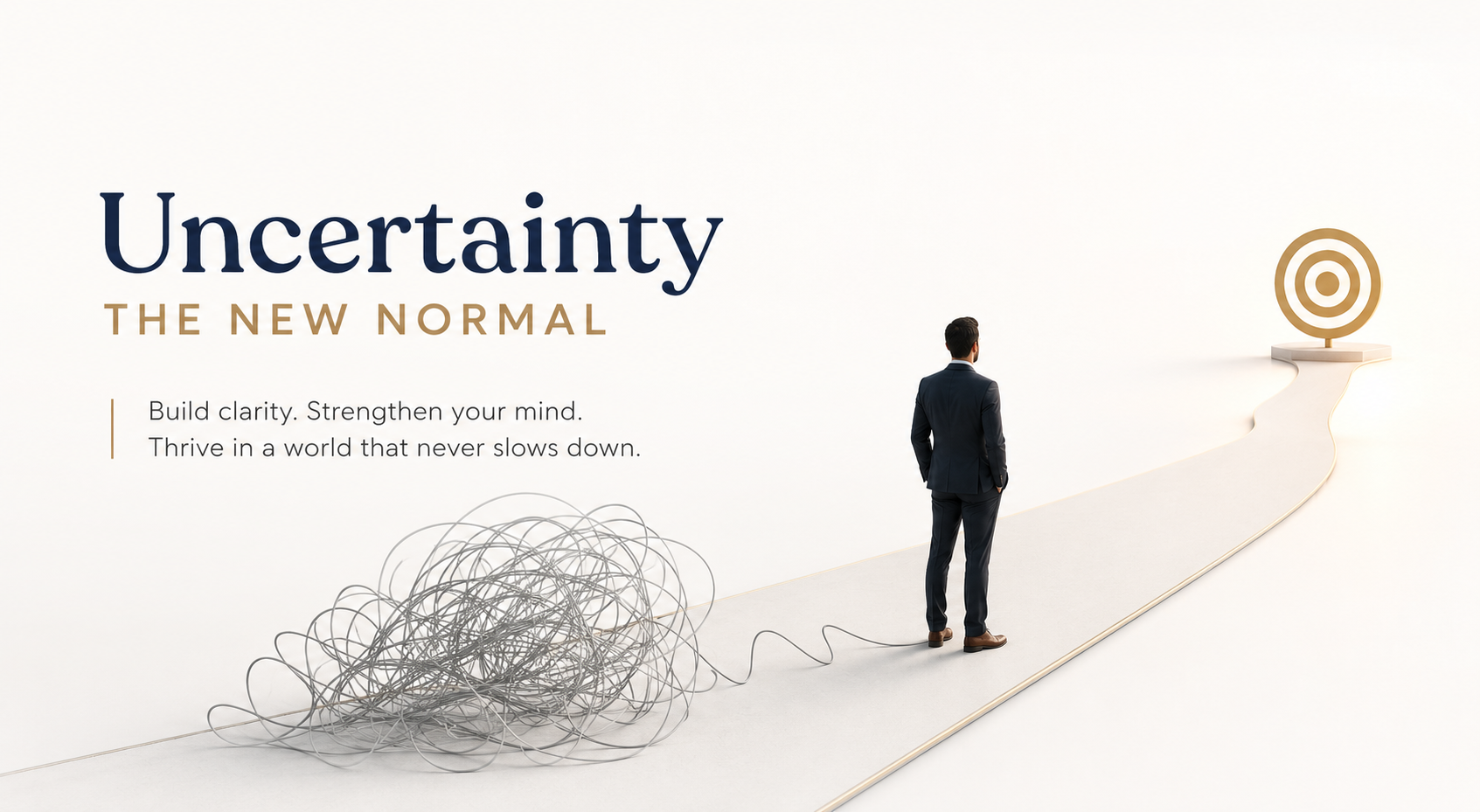
The world isn’t short of uncertainties. Industries are reshaping overnight, layoffs are dominating headlines and organizations are asking fewer people to do more than ever before. When the threats are this real, one question rises above all others:

👉 How do you protect yourself—not just professionally, but mentally, emotionally and physically?

You may not have an immediate solution to every challenge that your industry throws at you. But here’s the truth: protecting yourself from the numerous effects of enormous stress is more important than chasing a quick fix.

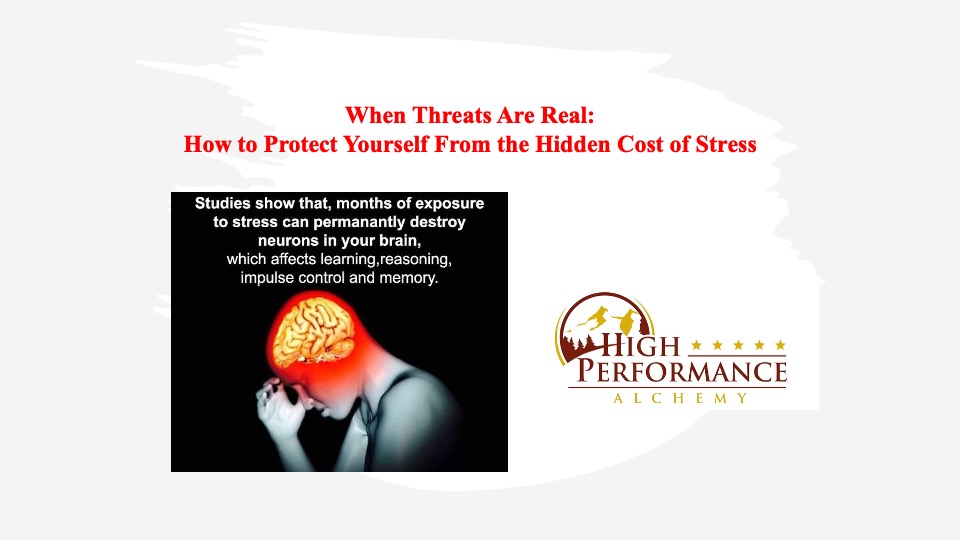
And this isn’t just about “staying positive” or “thinking happy thoughts.” This is neuroscience and the science is clear: stress rewires your brain, changes your decision-making and shapes your future if you don’t intervene.

Let’s unpack how stress impacts you, why resilience is non-negotiable and how you can use brain-based strategies to protect yourself—starting today.


When threats are real, your brain doesn’t distinguish between a corporate crisis and a life-or-death chase from the wild. Both activate the amygdala—the brain’s fear center.

Here’s what happens next:

  1. Fight, flight or freeze: Your brain pumps stress hormones like cortisol and adrenaline. Heart races. Muscles tighten. Alertness spikes.
  2. Tunnel vision: Blood flow is redirected from your prefrontal cortex (responsible for rational thought and problem-solving) toward survival systems. This is why you can feel stuck, panicked or unable to think clearly in stressful times.
  3. Memory distortions: High cortisol impairs the hippocampus, making it harder to recall positive memories or think long-term. You feel trapped in the “now,” even if things could get better later.
  4. Body wear and tear: Chronic stress weakens immunity, disrupts sleep, raises blood pressure and accelerates aging.

The key? Stress is not just “in your head.” It is rewiring your neural pathways. Left unchecked, it narrows your world and robs you of your clarity, health and future possibilities.


Resilience isn’t about denying stress. It’s about training your brain and body to adapt, recover and reset faster. Neuroscience calls this neuroplasticity—your brain’s ability to rewire itself in response to experience.

The more you practice resilience habits, the stronger your brain becomes at neutralizing stress responses. Think of it as building a “neural shield” against chaos.

Here are the five science-backed ways to protect yourself:


Breathing is not just relaxation—it is regulation.

  • How it works: Deep, slow breathing stimulates the vagus nerve, activating the parasympathetic nervous system (your “rest-and-digest” mode). This lowers cortisol and calms the amygdala.
  • Practice: Try the 4-6 technique—inhale for 4 seconds, exhale for 6 seconds. Do this for 2 minutes before important calls, meetings or when stress spikes.

Your breath is the fastest way to tell your brain: You are safe.


Your brain interprets stress not just based on reality, but also on the story you attach to it.

  • Neuroscience insight: The prefrontal cortex can “talk down” the amygdala through cognitive reframing. For example, changing “This industry is collapsing” to “This industry is transforming and I can adapt my skills”.
  • Why it works: This doesn’t deny reality—it redirects attention toward possibilities. Over time, this creates new neural associations that reduce fear and increase problem-solving capacity.

Stress and poor sleep form a vicious cycle.

  • Neuroscience insight: During deep sleep, the brain clears out stress chemicals through the glymphatic system. Without it, cortisol lingers, making stress worse.
  • Practical step: Protect 7–8 hours of consistent sleep. No screens 30 minutes before bed and keep a wind-down ritual. Sleep isn’t a luxury—it’s your stress reset button.

In chaotic times, your brain craves control.

  • Why: The striatum (reward center) releases dopamine when you achieve even small wins. This offsets helplessness and reinforces a sense of agency.
  • Practical step: Break tasks into micro-actions: “Send one email,” “Review one page,” “Take a 5-min walk.” Every small win rebuilds psychological safety and rewires the brain for progress.

Isolation magnifies stress; connection dissolves it.

  • Neuroscience insight: Social bonding releases oxytocin, which lowers cortisol and strengthens trust circuits in the brain.
  • Practical step: Call a friend, share your thoughts with a peer or simply check in on someone else. Protecting yourself doesn’t always mean going inward—sometimes it means reaching outward.

Here’s where many people get confused:

  • Limits are real. Your body can only do so much. Industries change. Jobs disappear. Time is finite.
  • Limiting beliefs are neural stories your brain repeats until they feel like truth. “I can’t adapt.” “I’m too old to learn.” “There are no opportunities for me.”

Neuroscience proves these beliefs are just pathways strengthened by repetition. Shatter them and new pathways emerge. Knowing your limits while dismantling limiting beliefs is the art of thriving.


It may sound counterintuitive, but stress also carries a hidden opportunity. Neuroscientists call it hormesis—the idea that short bursts of stress, managed well, make you stronger.

  • Muscles grow by tearing and repairing.
  • Immunity strengthens when challenged.
  • Resilience builds when you face, not flee, stress.

The key is not to drown in stress but to surf its waves—knowing when to rest, when to push and when to reframe.


Think about it: your brain has 86 billion neurons. Each one can form thousands of connections. That means your potential for rewiring is astronomical—far greater than any problem your industry can throw at you.

Stress may feel like it shrinks your world, but in reality, your brain is capable of expanding it beyond what you have ever imagined.

The threats around you may be real, but your response is where transformation begins.


Stress is inevitable. But suffering isn’t. The sooner you learn to protect yourself with neuroscience-backed tools, the stronger your mind, health and career become.

You don’t have to wait until things get “better.” You can start building resilience today.

👉 Take your next step here: https://www.highperformancealchemy.com/contact-us/

Because your future isn’t shaped by the threats around you—it’s shaped by how you train your brain to meet them.


#StressNeuroscience #ResilienceMatters #HighPerformanceAlchemy #MindsetShift #Neuroplasticity #ProtectYourMind #FutureReady #ThriveBeyondLimits

Protecting Your Mind from Layoff Anxiety: A Science-Backed Survival Guide

Protecting Your Mind from Layoff Anxiety: A Science-Backed Survival Guide

You scroll through the news and yet another round of layoffs has hit a company that looked “too strong to fail.” Maybe it’s in your industry, maybe it’s not—but the message hits home: no one is guaranteed safety.

For employees who are already laid off, there’s often a small, guilty sense of relief: the “waiting game” is over. Yes, there’s pain and uncertainty, but at least the looming question—“Am I next?”—is answered.

But what about you—the employee still in your job?

You come to work, do your best, meet deadlines, deliver results. Yet at the back of your mind is this constant hum: What if tomorrow it’s me?

This fear, left unchecked, can corrode your mental health, performance and even physical wellbeing. The irony? The very anxiety that comes from worrying about losing your job could make you less effective at keeping it.

So how do you protect your mind in this climate of uncertainty?

Let’s cut the fluff and go into practical, science-backed strategies that you can implement starting today.


Your anxiety isn’t weakness. It’s biology.

The human brain is wired with a negativity bias, meaning you are naturally more sensitive to threats than rewards. Evolutionarily, this kept your ancestors alive. But in the modern workplace, this bias often turns into chronic hypervigilance.

A Harvard Medical School study shows that uncertainty is one of the biggest triggers of anxiety. The brain perceives “not knowing” as a threat, activating the amygdala (your fear centre) and flooding your body with cortisol.

What does this mean for you?

  • Racing thoughts about “what if I’m next.”
  • Trouble sleeping.
  • Difficulty focusing on your actual work.
  • Feeling emotionally drained at the end of the day.

The first step in protecting your mind is recognizing: this is a brain-based response, not a personal flaw.


When you feel the spiral starting—rumination, overthinking or panic—use neuroscience to interrupt it.

The 90-Second Rule

Dr. Jill Bolte Taylor, a Harvard-trained neuroscientist, found that emotions like anger, fear or anxiety flood the body with stress chemicals for about 90 seconds. After that, the only thing keeping the emotion alive is your thinking loop.

Practical step:

  • When layoff anxiety hits, pause. Breathe deeply for 90 seconds.
  • Let the initial cortisol surge pass.
  • Refocus your thoughts deliberately on something constructive.

This is not denial—it’s neurological self-regulation.

Box Breathing (Used by Navy SEALs)

  • Inhale for 4 counts.
  • Hold for 4 counts.
  • Exhale for 4 counts.
  • Hold for 4 counts.
  • Repeat 3–4 times.

Research shows controlled breathing activates your parasympathetic nervous system, lowering cortisol and calming the amygdala.

Your brain can’t stay in panic mode if your body is signaling safety.


Cognitive-behavioral science has proven that how you frame a situation determines how your brain processes it.

Right now, you might be unconsciously running thoughts like:

  • If I lose my job, my career is over.
  • Layoffs are random; I have no control.
  • I will never find something as good again.

These thoughts create learned helplessness—a mental trap discovered by psychologist Martin Seligman in the 1970s. The brain, when convinced it has no control, shuts down initiative.

Instead, reframe.

  • “Layoffs don’t define my worth—they are about company economics, not personal value.”
  • “What I can control is my skill-building, networking and adaptability.”
  • “Each disruption in history has created opportunities for those ready to pivot.”

This isn’t toxic positivity. It’s strategic mental reframing based on neuroscience.


In uncertain times, your nervous system craves safety. If your company isn’t providing it, you can still create it.

Micro-Habits That Rewire Safety

  • Morning grounding: Spend 5 minutes writing down 3 things you can control today. This shifts your brain from helplessness to ownership.
  • Digital hygiene: Limit doom-scrolling about layoffs. Your brain can’t tell the difference between what’s happening “out there” and what’s happening to you.
  • Anchor routines: Regular sleep, nutrition and exercise aren’t luxuries. They stabilize your nervous system, making you resilient under stress.

Studies from Stanford show that employees with strong self-care routines have significantly lower burnout levels—even in industries hit hardest by layoffs.


One of the biggest sources of anxiety is tying your identity too closely to your role. When you think “I am this job,” the idea of losing it feels like losing yourself.

Neuroscience shows that identity flexibility—being able to see yourself in multiple roles (parent, learner, mentor, creator, problem-solver)—protects against existential anxiety.

Practical action:

  • Write a list of “Who I Am Beyond My Job.”
  • Invest weekly time in skills, hobbies or communities outside work.
  • Reconnect with people who see you beyond your title.

This widens your sense of self, so even if your job shifts, your identity stays stable.


You can’t eliminate uncertainty. But you can train your brain to handle it better.

Psychologists call this “uncertainty tolerance.” Research shows that people who actively expose themselves to manageable uncertainty (like learning a new skill, public speaking or trying something unfamiliar) build resilience to bigger shocks.

Practical steps:

  • Volunteer for projects outside your comfort zone.
  • Learn a skill not directly tied to your current role but valuable in the market.
  • Practice saying “yes” to small unknowns daily.

Your brain becomes familiar with the sensation of “not knowing,” which reduces panic when bigger uncertainties hit.


Think of resilience like a savings account. The more deposits you make daily, the more protected you are when crisis withdrawals happen.

Deposits include:

  • Sleep (7–8 hours is non-negotiable for emotional regulation).
  • Movement (exercise increases BDNF—brain-derived neurotrophic factor—which literally grows resilience neurons).
  • Social support (having 2–3 trusted people to share with reduces stress hormones by 30%).
  • Continuous learning (neuroplasticity thrives on novelty, keeping your brain adaptable).

When layoffs hit the news, you draw on this bank—not from empty reserves.


Let’s be brutally honest: there is no such thing as job security anymore.

But what you can build is career capital—a term coined by Cal Newport. Career capital is the rare and valuable skills, reputation and network that make you employable anywhere.

Instead of obsessing about whether this job will last, ask:

  • “Am I growing my career capital every week?”
  • “What skills will still be in demand five years from now?”
  • “Who am I connecting with that expands my opportunities?”

This reframes anxiety from “What if I lose this?” to “How do I make myself valuable anywhere?”


Isolation is fuel for anxiety. Research by UCLA neuroscientist Matthew Lieberman shows that social pain (like loneliness) activates the same brain regions as physical pain.

If you are silently carrying layoff anxiety, it grows heavier.

Instead:

  • Talk openly with trusted peers about your concerns.
  • Seek mentorship from those who have navigated downturns before.
  • Work with a coach to reframe your mindset and design a resilience plan.

This is not about venting endlessly—it’s about building a support ecosystem.


Here’s the hard truth: you cannot control company decisions, the economy or market trends.

But you can control:

  • How you regulate your nervous system.
  • How you build your skills and network.
  • How you shape your daily habits.
  • How you interpret events mentally.

The science of locus of control proves that people who focus on what they can control experience lower stress, higher motivation and better long-term outcomes.


Layoffs will keep happening. That’s reality.

But you don’t have to live trapped in fear. Your brain is adaptable. Your resilience can be trained. Your focus can shift from “Will I be safe?” to “How do I stay strong, adaptable and ready no matter what?”

The choice isn’t between denial and despair. It’s between letting anxiety run you—or running your brain with science-backed strategies.

If you are tired of being consumed by the constant noise of uncertainty and want to protect your mind while designing a stronger future, let’s talk.

👉 Reach out here: https://www.highperformancealchemy.com/contact-us/

Your future is not written yet. But your mindset will decide how you write it.


#CareerResilience #LayoffAnxiety #FutureProofYourself #MindsetMatters #NeuroscienceOfSuccess #HighPerformanceAlchemy #WorkplaceWellbeing

The Power of Silence: How It Benefits Your Wellbeing (Especially in Mid-Career Chaos)

The Power of Silence: How It Benefits Your Wellbeing (Especially in Mid-Career Chaos)

In a world driven by notifications, noise and non-stop communication, silence seems like a luxury—or worse, a void. But for mid-career professionals juggling performance, family, financial responsibility and fears of uncertainty, silence isn’t emptiness. It’s fuel.

At this critical juncture in your career, silence could be the most powerful tool you are not using. It might just be the missing piece in your wellbeing puzzle.

Between back-to-back meetings, team escalations, KPI reviews, deadlines and family duties, the question is not “Can I afford to be silent?”—the question is “Can you afford not to?”

Silence is not withdrawal. It’s not weakness. It is a space where your brain processes, recovers, recalibrates and grows. Especially for professionals between the ages of 35–50, when career stakes rise and personal bandwidth tightens, silence is no longer optional. It is strategic.

Let’s look at what science says.

When you are silent—truly silent, without distractions—your brain doesn’t shut down. In fact, the opposite happens. According to research published in the journal Brain Structure and Function, two hours of silence per day prompted the development of new cells in the hippocampus—the region associated with learning, memory and emotion regulation.

Another study published in Frontiers in Human Neuroscience confirms that silence activates the brain’s default mode network (DMN)—a set of brain regions responsible for introspection, self-awareness and emotional insight.

These moments of rest allow you to:

  • Process unresolved conflicts.
  • Reflect on complex decisions.
  • Reduce emotional reactivity.
  • Access creative breakthroughs.

In short, silence is not passive. It’s neural nourishment.

As a mid-career professional, you are likely operating in high-performance zones without recovery. You are navigating leadership expectations, changing workplace cultures and internal fears about relevance, obsolescence or stagnation. Add personal responsibilities—and you are constantly in output mode.

Here’s how silence helps your brain and your career:

Studies have shown that just two minutes of silence is more relaxing than listening to relaxing music. Silence lowers blood pressure and cortisol levels, allowing your nervous system to move from fight-or-flight to rest-and-digest.

Silence stimulates the growth of gray matter, particularly in the prefrontal cortex, associated with decision-making and self-control. For a leader, this means better clarity under pressure and less impulsive communication.

Your brain processes around 6,000 thoughts per day. Constant stimuli mean constant switching. Silence helps reduce cognitive load and increases your brain’s ability to focus on deep work—an asset in the age of shallow attention.

You have built experience for years. But silence helps convert that experience into wisdom. When you are not reacting to external noise, you can tune into your internal guidance system—what most high-level performers call “gut instinct.”

Silence helps you listen better—not just to others, but to yourself. You become more attuned to emotional triggers, unresolved stressors and hidden fears. This builds inner stability, which then reflects in outer relationships.

Let’s clarify a few myths, especially for high-functioning professionals who equate silence with weakness or irrelevance:

  • Silence is not disengagement. It is engagement with yourself.
  • Silence is not laziness. It is intelligent restoration.
  • Silence is not spiritual fluff. It is a science-backed reset button.
  • Silence is not the absence of performance. It is the foundation of sustainable performance.

You don’t have to go to the Himalayas or switch off your phone for a week. Science shows even short, intentional silence can create massive shifts. Start with:

  • Block 10 minutes post-lunch or mid-afternoon.
  • Sit comfortably.
  • Eyes closed or open—no devices, no talking.
  • Let your thoughts wander. Don’t force stillness. Let silence do the work.
  • 10 minutes before logging in or out of work: no screens, no inputs.
  • Let your mind buffer. This improves emotional regulation between work/home transitions.
  • Resist the urge to jump in or give advice immediately.
  • Pause. Breathe.
  • Listen—not just to respond, but to understand.
  • Silence here builds trust, influence and depth in relationships.
  • Try spending the first 20–30 minutes of your day in quiet.
  • No emails, news or social media.
  • Reflect, journal, stretch or just be.
  • This gives your brain a calm runway before the chaos takes off.

One of our clients—a senior category manager in her 40s—came to us feeling chronically fatigued, reactive in meetings and unsure if her career was plateauing. She was always “on”—mentally, emotionally, professionally.

We didn’t suggest a sabbatical or a drastic move. Instead, we brought silence into her daily rhythm: 7 minutes mid-day, 10 minutes of silent reflection post meetings and silent journaling before bed.

In four weeks, her sleep improved. In six, her communication became calmer and more intentional. By eight, she was promoted to a larger portfolio—not because she worked harder, but because she showed up with more clarity, emotional control and creative leadership.

You don’t need another webinar or to-do list. You need space.

Space to listen.
Space to breathe.
Space to hear what’s really going on inside.
Space to reconnect with the most important conversation you are having: the one with yourself.

In silence, you will hear more than you ever imagined.

And your wellbeing will thank you.

At High Performance Alchemy, we integrate neuroscience, NLP and executive coaching to help professionals like you lead with clarity and communicate with impact—without burning out.

Want to experience how silence can become your superpower in career and life?

📩 Reach out to us: www.highperformancealchemy.com/contact-us

Let’s help you create space where your best thinking—and best self—can emerge.

#PowerOfSilence #MidCareerGrowth #NeuroscienceOfWellbeing #HighPerformanceAlchemy #SilentLeadership #EmotionalResilience #BrainBased #CareerWellbeing #ReclaimYourMind #SilenceIsStrength

Master Your Emotions, Master Your Life

Master Your Emotions, Master Your Life

Do you pay attention to your emotions? If not, it’s time to start. Right now.

You may believe success is built on strategy, skill or intelligence. But here’s the uncomfortable truth—if you can’t manage your emotions, all that brilliance can unravel fast. 

Whether you are leading teams, scaling businesses or simply trying to make better decisions, your emotions silently drive your outcomes.

The way you respond to stress, handle disappointment and read others’ emotions can either elevate you—or derail you.

In this era of AI and automation, emotional mastery isn’t a luxury. It’s your competitive edge.

Artificial Intelligence is here. Tools are replacing tasks. Systems are replacing roles. But there’s one thing no machine can replicate—emotions.

While AI handles data, humans handle meaning. Emotional intelligence—especially self-awareness and regulation—is now considered one of the top 5 skills for the future by the World Economic Forum. Why? Because no matter how advanced technology becomes, it cannot feel. It cannot connect. It cannot lead with empathy.

That’s your power. But only if you choose to understand it.

So, how exactly does the brain handle emotions?

Emotions are generated in the limbic system, specifically in the amygdala—the brain’s emotional alarm bell. Its job is to protect you. But it often overreacts. When it perceives threat (even in the form of criticism or uncertainty), it can hijack your thinking brain—the prefrontal cortex—which governs logic, reasoning and decision-making.

That’s why when you are upset or anxious, you say or do things you later regret.

But there’s good news. With awareness and practice, you can train your prefrontal cortex to stay in charge more often. Neuroscience confirms that emotional regulation improves cognitive performance, decision-making and stress response.

👉 Here’s a brilliant 2-minute explainer that breaks down how emotions are formed in the brain:


🎥 Watch: How Emotions Are Made in the Brain

Anuj was the smartest person in the room—but also the most reactive. Every time something went wrong, his temper took over. One incident involving public shaming of a team member nearly cost him his position.

Enter coaching.

He began understanding the layers of his emotional experience. What he thought was just anger was actually a blend of fear, insecurity and frustration. By learning to label his emotions accurately and pause before reacting, Anuj transformed from being feared to being respected.

Leadership is not about suppression. It’s about awareness.

This technique, coined by Dr. Daniel Siegel, is a science-backed method to calm emotional overwhelm by naming what you feel.

When you identify your emotion—say, “I feel frustrated”—your brain reduces amygdala activity and activates the prefrontal cortex. This leads to better self-control, perspective and choices.

  1. Pause: When emotions run high, don’t react. Breathe.
  2. Feel & Name: Say what you are feeling. Be specific: “disappointed,” “anxious,” “jealous,” not just “bad.”
  3. Observe: Notice where it lives in your body—tight chest, clenched jaw, restless energy?
  4. Respond Intentionally: Now decide how to act, instead of being ruled by reaction.

🧬 MRI studies show this practice literally rewires your brain for clarity and calm over time.

Unchecked emotional patterns don’t just affect your mood. They affect:

  • 🧠 Focus and productivity
  • 🤝 Trust in relationships
  • 🎯 Goals—through sabotaging behaviours
  • 💼 Leadership presence
  • 🧬 Health—through chronic stress

Here’s the thing: emotions don’t go away when you ignore them. They go underground—and come back as anxiety, resentment or burnout.

Tanvi was the kind of high performer every company wants. She delivered. She smiled. She was dependable. But inside? She was running on fumes. Suppressing her emotions led to sleepless nights, low motivation and chronic headaches.

She didn’t yell or break down. She just numbed out—a common but overlooked emotional pattern.

When she started practicing 5-minute emotional check-ins, she realized she had been feeling invisible and undervalued for years. That insight alone gave her the clarity to initiate a conversation with her leadership and redesign her role.

Your emotions are messages. If you don’t listen, you will live misaligned.

Start using these 1-minute questions to build emotional clarity:

  • What am I feeling right now? (Name at least 2 emotions)
  • What triggered this emotion?
  • Is this about the present—or an old wound resurfacing?
  • What do I need right now to support myself?
  • What would a wise, calm version of me do next?

Write it down. Or just pause and reflect.

The point is awareness, not analysis. The more you practice, the clearer your inner landscape becomes.

Answer honestly:

  1. Do you often say “I don’t know what I feel”?
  2. Have you reacted strongly and regretted it later?
  3. Do people describe you as too intense—or too detached?
  4. Do you suppress your feelings to avoid confrontation?
  5. Do you regularly check in with your emotions?

Scoring:
✔ 4–5 “Yes” → You have got awareness. Keep refining.
✔ 2–3 “Yes” → Some clarity, but time to deepen it.
✔ 0–1 “Yes” → Start your emotional fitness journey today.

Start small. Practice emotional check-ins before meetings, decisions or high-stakes conversations. Use the Name It to Tame It technique daily.

If you are leading people, driving change or scaling your own growth—you can’t afford emotional fog.

If you want to go deeper into high-performance coaching and emotional mastery that rewires your mindset and behaviour:

👉 Talk to our experts at High Performance Alchemy 

and start your transformation today.

You are not weak because you feel. You are powerful because you understand.

The more clarity you have inside, the more impact you create outside.
Emotions are not interruptions to your life. They are the very fuel for growth—if you learn to master them.

#EmotionalMastery #SelfAwareness #NameItToTameIt #Neuroscience Leadership #EmotionalIntelligence #MindsetMatters #AIAndEQ #HighPerformanceAlchemy #LeadershipTools #ResilienceSkills

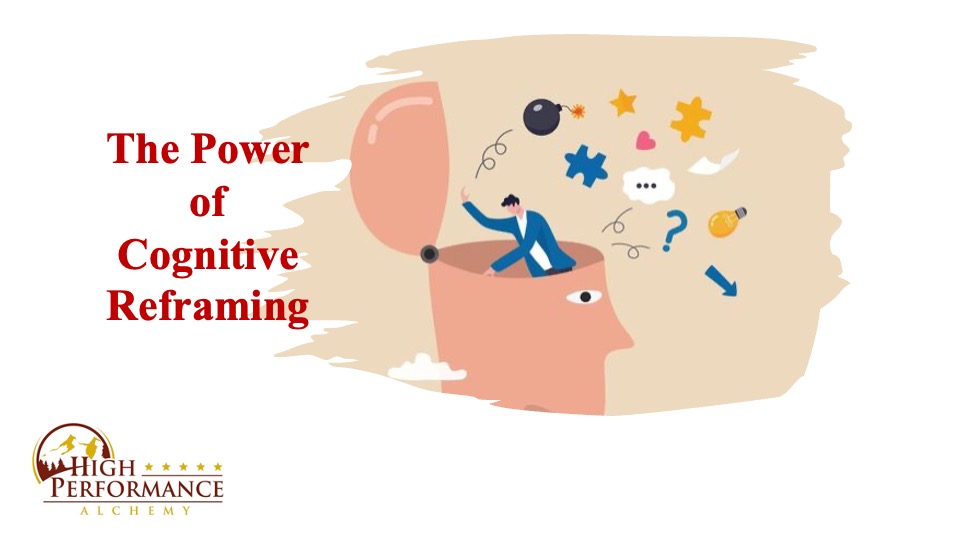
The Power of Cognitive Reframing: Your Secret Weapon to Staying Calm Amidst Chaos

The Power of Cognitive Reframing: Your Secret Weapon to Staying Calm Amidst Chaos

Staying calm when everything around you feels like it’s falling apart isn’t easy. You might have read self-help books, attended workshops or tried various techniques to manage stress, but when chaos strikes, the mind often defaults to panic. The noise, pressure and uncertainty build up, making it feel impossible to maintain any semblance of peace. The truth is, staying calm isn’t about having the right tools around you. It’s about mastering the one tool that you carry with you everywhere: your mind.

This is where cognitive reframing becomes a game-changer. If you have never heard of it before, cognitive reframing may be the most powerful mental shift you can make to navigate uncertainty with a steady, calm mind.

Imagine this: You are stuck in traffic, already running late for an important meeting. As your mind races, thoughts like, “Why does this always happen to me?” and “I’m going to ruin my entire day!” flood your brain. Stress builds, your heartbeat quickens and frustration takes over. Now, what if, instead of seeing this situation as a catastrophe, you reframed it? Instead of stressing out, you choose to see it as an opportunity. You might think, “Okay, this is unexpected, but maybe I can use this time to review my key points for the meeting.” Or, “This could be a great moment to catch up on that podcast I have been putting off.” You can even call ahead and inform them of your delay, so that you can focus on what’s within your control.

That shift in mindset, from helplessness to control, is cognitive reframing. It’s the process of consciously changing the way you interpret a situation to alter your emotional response. The event remains the same, but how you perceive it directly impacts whether you spiral into anxiety or remain calm.

Your brain is wired to react to perceived threats through the fight-or-flight response. This ancient survival mechanism was crucial for early humans facing life-threatening situations, like wild animals. However, in today’s world, it often kicks in during moments of stress, such as a tight deadline at work or a difficult conversation with a colleague. This stress response releases cortisol and adrenaline, which can overwhelm your system, making it difficult to think clearly or make rational decisions.

Cognitive reframing works by interrupting this automatic, panic-driven response. Instead of interpreting every stressful situation as a threat, you can consciously choose to assign a different meaning. Research in cognitive psychology shows that the way we frame our experiences directly impacts our emotional well-being. By shifting your perspective, you can reduce stress, increase resilience and regain a sense of control—even when external chaos remains unchanged.

Your brain has something called neuroplasticity, which means it has the ability to form new neural pathways. By practicing cognitive reframing, you train your brain to interpret challenges in healthier ways. Over time, this rewires your brain to respond with clarity, rather than panic, in stressful situations.

The more you practice reframing, the more natural it becomes. It’s like building muscle in your mind—each time you choose a more constructive interpretation of a stressful event, your brain strengthens that pathway, making it easier to stay calm next time.

It’s easy to read about cognitive reframing in theory, but how do you apply it in real-time when stress is mounting? Here’s how:

  1. Pause and Reflect:
    The next time you feel overwhelmed, take a moment to pause. Ask yourself, “What’s another way to view this situation?” For instance, instead of thinking, “This is the worst day ever,” try reframing it as, “This is a tough moment, but I have handled worse before.”
  2. Assess the Impact of Your Thoughts:
    Ask yourself whether your thoughts are helping or hurting you. Are your thoughts making you more anxious? If so, actively choose a perspective that keeps you grounded. For example, if your project at work falls apart last minute, you might initially feel frustration or panic. Reframing allows you to see it as an opportunity to problem-solve, learn adaptability and build resilience.
  3. Apply Compassion:
    We are often kinder and more rational when advising others. Use that same compassion on yourself. For example, if a close friend were going through a tough time, you’d probably remind them that they have faced challenges before and come out stronger. Why not offer that same advice to yourself in moments of stress?

Cognitive reframing is a skill that improves with practice. Like any muscle, it gets stronger the more you use it. The more you consciously shift your perspective, the easier it becomes to remain calm in the face of chaos.

One effective way to train your mind is through journaling. Set aside time each day to write down a stressful situation and actively reframe it. This exercise trains your brain to look for alternative, more positive perspectives, even in challenging moments. Over time, the process becomes more intuitive and your brain starts naturally interpreting stressful events with greater resilience.

Chaos will always be a part of life. The world is unpredictable and external circumstances often feel beyond our control. But how you engage with that chaos is entirely within your power. Cognitive reframing isn’t about pretending everything is fine or dismissing your emotions. It’s about choosing a perspective that serves you, rather than letting your emotions control you. It’s about regaining your peace, no matter what is happening around you.

The next time life throws you into uncertainty, remember this: you have the ability to decide how you will respond. You can choose to drown in the stress or you can rise above it with clarity and calm.

So, what’s one situation in your life that could use a little reframing right now?
If you are looking for personalized guidance on managing stress, increasing resilience or navigating leadership challenges, we are here to help. 

and let’s work together to bring clarity and calm into your life.

Remember, the power to reshape your response to stress is within your control—embrace cognitive reframing and transform chaos into clarity.

#CognitiveReframing #StressManagement #EmotionalResilience #LeadershipSkills #Mindfulness #PersonalDevelopment #CareerGrowth #StressRelief #EmotionalIntelligence #ChaosManagement #ProductivityTips #LifeCoaching #PositiveThinking #Neuroplasticity #SelfCare #OvercomingStress #PersonalGrowth #MentalHealth #CareerAdvice #MindsetMatters #ResilienceBuilding

Women Leadership: Beyond Breaking The Glass Ceiling

Women Leadership: Beyond Breaking The Glass Ceiling

When we talk about women in leadership, the conversation often centres around breaking the glass ceilinggender equity and fair representation. These are vital issues, but they only scratch the surface. Women leadership is not just about fairness — it’s about future-readiness. Organizations that recognize this are not just promoting diversity; they are embracing a competitive advantage.

If you are only looking at women leadership through the lens of equality, you are missing a much bigger opportunity — one that can transform how businesses grow, innovate and lead in complex times.

The workplace is evolving faster than ever. With digital transformation, hybrid workforces and rapid innovation taking centre stage, leaders today must navigate uncertainty, foster trust and drive collaboration. Women leaders excel in these areas, not just because of their identity, but because of the distinct leadership qualities they bring.

Studies consistently show that companies with greater gender diversity at leadership levels outperform others in profitabilityinnovation and employee engagement. It’s time we stop treating women leadership as a moral obligation — and start seeing it as a strategic imperative.

Research shows that women in leadership positions tend to promote:

  • Empathetic communication
  • Collaborative decision-making
  • Psychological safety
  • Inclusive team cultures

These are not just soft skills — they are mission-critical competencies in today’s agile, team-based environments.

By fostering a collaborative leadership style, women drive cultures that are not only more adaptive but also more innovative. This kind of environment helps unlock creativityreduce attrition and boost team performance.

Women leaders often emphasize work-life balanceemotional intelligence and growth-oriented feedback — qualities that Millennials and Gen Z employees actively seek in their leaders.

When employees, regardless of gender, work under inclusive and empathetic leaders, retention improvesengagement scores rise and trust deepens.

If your company is facing challenges with employee engagement, morale or innovation, investing in the development of women leaders could be your most strategic move yet.

Representation matters. But representation alone isn’t enough. What matters more is authentic leadership — women leading not by imitating traditional styles but by redefining leadership through their own lens.

When young women see others leading with authenticity, it signals that leadership isn’t about conforming — it’s about contributing differently. It’s about reshaping outdated leadership models into inclusive, dynamic and forward-thinking ecosystems.

And that starts with companies rethinking how leadership potential is assessedhow leaders are developed and what performance looks like.

More than ever, leadership is about taking a long-term view. Organizations with women in leadership roles tend to perform better on Environmental, Social and Governance (ESG) metrics. They prioritize sustainable growth over short-term wins and are more attuned to the needs of diverse stakeholders.

If your business is serious about long-term success, women leadership isn’t optional — it’s essential.

Whether you are a CXO, team manager or individual contributor — you have a role to play:

  • Mentor and sponsor women in your team
  • Reflect on biases in your feedback and promotion processes
  • Advocate for inclusive practices in your meetings and project teams

Women leaders don’t need fixing. What needs fixing is the system that underrepresents diverse leadership styles. Start where you are. Influence what you can.

The next time someone says, “We already have diversity policies in place,” ask: Is that enough?
Are we building systems that truly support diverse leaders?
Are we redefining leadership or just repackaging the same mold?

Women leadership is not a checkbox. It’s a business growth strategy, a cultural evolution and a path to organizational excellence.

Let’s move beyond tokenism. Let’s design leadership development strategies that embrace complexitybuild resilienceand unlock human potential.

👉 Visit our 

page to learn how we can help you build a future-ready leadership culture that truly reflects diverse strengths.


#LeadershipDevelopment #WomenInLeadership #InclusiveLeadership #HumanExcellence #FutureOfWork #ExecutiveCoaching #CareerGrowth #BusinessSustainability