

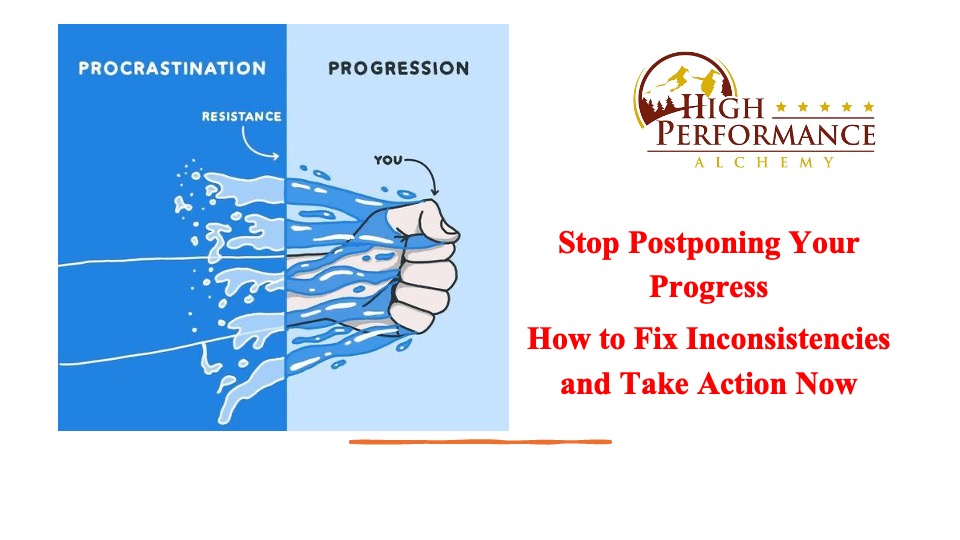
Stop Postponing Your Progress: 7 Ways to Overcome Postponing and Take Action Today

Stop Postponing Your Progress: 7 Ways to Overcome Postponing and Take Action Today

Do you ever feel like you are standing right at the edge of success, but the act of postponing keeps pulling you back?

You have set your goals.

You have made your plans.

Motivation strikes now and then. But still—you hesitate.

You keep postponing.

You tell yourself, “Just one more day. I’ll start tomorrow.” And then, you end up postponing again.

Before you know it, the habit of postponing becomes a quiet thief, stealing your momentum and blurring your dreams. The space between knowing and doing gets filled with delay—and that’s where many dreams fade.

Let’s not let that happen. Let’s stop postponing and start taking action—today.

Before you can overcome inconsistency, you need to understand what causes it. Often, it’s not your goals or your capabilities—it’s the execution. Here are the most common reasons why we delay taking action:

  • Overwhelm: Your goals feel massive and unmanageable.
  • Perfectionism: You wait for the “perfect” moment or ideal conditions that rarely come.
  • Procrastination: Fear of failure (or success) leads you to delay.
  • Lack of clarity: Without a clear path forward, focus becomes fragmented.

Understanding the root cause is step one. Now let’s move to action.

Big goals can be paralyzing. To gain traction, break them into small, actionable steps.

  • Ask: What’s the smallest action I can take today?
  • Break your goal into weekly or daily chunks.

Example: Want to write a book? Don’t aim to complete it this month. Start with one paragraph. Then one page. Then one chapter. Momentum comes from movement.

Perfectionism is procrastination in disguise. The most successful people aren’t perfect—they are consistent.

  • Create a non-negotiable routine: even 10 minutes a day counts.
  • Focus on building habits over chasing outcomes.

Tiny steps taken consistently beat occasional bursts of brilliance every time.

Motivation is fleeting. Discipline gets things done.

Don’t ask yourself, “Do I feel like doing this?” Instead ask, “What’s the next right step?”

Use the 2-Minute Rule: If a task feels daunting, commit to doing it for just two minutes. That’s often enough to get over the mental hump.

In a noisy world, focus is your superpower.

  • Identify your top distractions—social media, notifications, multitasking—and create limits.
  • Set up a focused environment. Use productivity tools. Give your goals the attention they deserve.

Accountability increases follow-through. When someone else knows your goals, your odds of taking action skyrocket.

  • Find an accountability partner: a friend, coach or mentor.
  • Track your progress in a journal or app. Visual reminders of progress keep you going.

Don’t rely on memory—build systems that support momentum.

Progress fuels motivation. Celebrate the doing, not just the outcome.

  • Treat yourself when you complete a milestone.
  • Reflect on how far you have come.

Even a tiny win can reignite your drive.

The biggest trap? Postponing for the “right time.”

The truth? There’s no perfect moment. The best time to start is now.

Take a small step today—write your next task, send that email, schedule that call. Action creates clarity. Clarity fuels confidence.

The path to your goals isn’t a straight line. But if you take one small action every day, you will look back six months from now and realize how far you have come.

You don’t need to feel 100% ready.

Just begin!

  • Break your goal down.
  • Be consistent, not perfect.
  • Focus on the next step—not the whole staircase.
  • Build systems that support progress.
  • And most importantly, take action today.

You already know what to do.

You just need to do what you know.

If you are finally done postponing and now ready to take your next big step, then it’s time to move forward—with clarity, consistency and confidence. And when you do, know that we are here to support you every step of the way.

#lifecoach #executivecoach #career #resilience #workplacestress #leader

When Workplace Manipulation Threatens Your Mental Health and Career

When Workplace Manipulation Threatens Your Mental Health and Career

The workplace is often compared to a chessboard, where every move can impact your growth, relationships and peace of mind. However, not every player follows the rules. Tricky or manipulative situations can creep into your professional life, leaving you feeling unsettled and questioning your decisions. Manipulation, if unchecked, don’t just hijack your mental health—they can derail your career prospects.

Let’s explore how these subtle dynamics work and more importantly, how to handle manipulation effectively.

Workplace manipulation often starts subtly. It could be a colleague who takes credit for your work, a manager who gaslights your concerns or a team member who subtly sabotages you while appearing supportive. Over time, these actions can chip away at your confidence and clarity.

Here’s the tricky part: manipulative behaviors often masquerade as normal workplace interactions. A seemingly casual “joke” might actually be undermining your credibility. A friendly “favour” may come with strings attached, locking you into a dynamic where you owe someone something without realizing it.

The result? You start questioning your abilities and second-guessing your decisions. This mental strain can lead to anxiety, stress and even burnout, making it harder to focus on your actual goals.

Manipulative tactics in the workplace thrive on emotional vulnerability. They target your need for validation, your fear of conflict or your desire to belong. Over time, these interactions create a toxic loop:

  • Self-Doubt: Constant manipulation makes you question your worth and competence.
  • Chronic Stress: Navigating these situations drains your emotional energy, leaving you exhausted.
  • Isolation: You may feel isolated as trust erodes between you and your colleagues.
  • Impostor Syndrome: Over time, you might start believing you are not capable, even when evidence suggests otherwise.

This doesn’t just affect your performance—it affects your ability to dream big and pursue meaningful career opportunities. When you are caught in the web of manipulation, your mental bandwidth is consumed by damage control instead of growth.

Manipulation can be insidious in how it undermines your career. For example:

  • Missed Opportunities: If someone takes credit for your work, you miss the recognition you deserve, which can impact promotions or new roles.
  • Damaged Reputation: Subtle rumors or miscommunications might paint an inaccurate picture of your capabilities.
  • Stagnation: Spending time dealing with manipulative behaviors means less time focusing on innovation, leadership or strategic growth.
  • Loss of Confidence: When manipulation erodes your self-belief, you may stop advocating for yourself in important conversations like performance reviews or new projects.

It’s a double-edged sword. While you are fighting to stay emotionally balanced, your career progression can feel like it’s on hold.

The good news? You can regain control. It starts with awareness and action.

  • Recognize the Behavior: Manipulation thrives in ambiguity. Pay attention to red flags—are you constantly second-guessing interactions with a particular colleague? Are you feeling drained after conversations with certain people?
  • Set Boundaries: Be clear about what’s acceptable and what’s not. For example, if someone takes credit for your work, gently but firmly correct the narrative in a group setting: “I’m glad the team values this idea—it was exciting to work on this project.”
  • Document Everything: If manipulation is impacting your work, keep a record of relevant interactions. Written evidence can be invaluable if you need to escalate concerns.
  • Build a Support Network: Seek out mentors, trusted colleagues or even external professional networks to provide perspective and advice.
  • Strengthen Emotional Resilience: Invest in practices that help you stay grounded, whether it’s mindfulness, therapy or even just regular exercise. When you are emotionally resilient, manipulative tactics lose their grip.
  • Know When to Escalate: If the behavior persists, don’t hesitate to involve HR or a higher authority. Use documented instances to back up your claims and remain factual, not emotional, in these discussions.

Manipulative workplace dynamics can feel overwhelming, but they don’t have to define your professional journey. By staying aware, setting boundaries and protecting your mental health, you can navigate these tricky situations without letting them derail your success.

Your career isn’t just about what you achieve—it’s also about how you feel along the way. Protect your peace, assert your value and move forward with confidence. Because no amount of manipulation can hold back someone who’s clear about their worth.

Don’t let manipulation or toxicity steal your potential—stand up, set boundaries and take charge of your mental health and career today. The sooner you act, the sooner you reclaim your path to success.

If you are experiencing manipulation at work, don’t hesitate to reach out for guidance on how to protect your career and well-being.

for personalized advice and strategies to reclaim your professional life. Let’s build a path to success together!

#WorkplaceManipulation #MentalHealthAtWork #CareerGrowth #EmployeeWellbeing #LeadershipSkills #CareerSuccess #Resilience #EmotionalIntelligence #WorkplaceStress #HealthyWorkplace #SelfAdvocacy #PersonalGrowth #BoundariesAtWork #ImpostorSyndrome #WorkplaceCulture #StressManagement #ToxicWorkplace #CareerDevelopment #ProfessionalGrowth

Making the Most of the Waiting Period: What to Do When Progress Feels Slow

Making the Most of the Waiting Period: What to Do When Progress Feels Slow

We have all experienced those moments when life hits pause—when the job offer hasn’t come through yet, the results of a major project are pending or a personal goal feels just out of reach. These waiting periods can feel frustrating, even disheartening. But what if we told you that this in-between phase is not a pause at all, but rather an opportunity in disguise?

Whether you are navigating a career transition, working toward a long-term goal or just feeling stuck in limbo, learning how to make the most of the waiting period can change everything. In this blog, we will explore eight powerful ways to stay productive, focused and emotionally balanced when visible progress seems slow.

Waiting offers a rare gift: time to reflect. In the hustle to achieve, it’s easy to lose sight of why we started in the first place. Use this time to step back and ask yourself:

  • Am I still aligned with the goals I set earlier?
  • Are these goals still meaningful to me?
  • What have I learned from the journey so far?

This kind of reflection brings clarity. It helps you ensure that when things do start to move, you are going in the direction that truly matters to you. It also gives you a chance to pivot if needed—before investing more time and energy.

One of the most productive things you can do during slow periods is to upskill. Think about the competencies that will be valuable in your career or personal life in the next 6–12 months. Could you:

  • Enroll in a short online course?
  • Read books or listen to educational podcasts?
  • Learn a new software or tool relevant to your industry?
  • Improve your communication or emotional intelligence?

By building your skillset now, you position yourself as more competitive and capable when new opportunities come your way.

A strong professional and personal network can open doors that hard work alone cannot. Use this time to connect, reconnect and contribute. You can:

  • Reach out to old mentors or colleagues
  • Attend virtual or in-person networking events
  • Join online communities related to your field
  • Share valuable content or insights on platforms like LinkedIn

Building authentic relationships now can lead to collaborations, referrals and insights that accelerate your growth once momentum picks up again.

When you are in a waiting phase, it’s easy to lose motivation or fall into procrastination. A simple, structured daily routine keeps you grounded and productive. Consider including:

  • Morning journaling or meditation
  • Time-blocked work or learning sessions
  • Daily movement or exercise
  • Evening reflection and gratitude practice

Even small wins add up over time and help you maintain momentum during uncertain phases.

One of the biggest mindset shifts you can make is this: progress is often invisible. Just like seeds grow underground before sprouting, a lot of meaningful work happens behind the scenes. You might not see it right away, but that doesn’t mean nothing is happening.

Trust the process. Trust your efforts. And trust the timing.

Mindset is everything during the waiting period. It’s easy to spiral into self-doubt or frustration, but this is the perfect time to build mental resilience. You can:

  • Practice daily gratitude—write down three things you are thankful for
  • Use journaling to unpack your thoughts and emotions
  • Try mindfulness, breathwork or meditation
  • Reframe your thoughts: Instead of “nothing is happening,” try “this is a time for growth and preparation”

A strong mindset can turn waiting into a powerful phase of internal transformation.

Just because you are waiting for the big leap doesn’t mean you should stand still. Small, consistent actions keep you moving forward and create a sense of progress. Examples include:

  • Updating your LinkedIn profile or resume
  • Reaching out for informational interviews
  • Working on a side project or passion hobby
  • Sending a follow-up email or inquiry

These steps may not bring immediate results, but they lay the foundation for future breakthroughs.

Finally, embrace rest. Sometimes, what feels like stagnation is really a season of restoration. Give yourself permission to:

  • Sleep in a little
  • Take a walk in nature
  • Binge a show you love
  • Spend unstructured time with family and friends

Rest is not the opposite of progress—it’s a critical part of it. Rested minds make better decisions and energized bodies act with more intention.

So, the next time you find yourself stuck in the waiting room of life, remember: this isn’t wasted time. It’s your chance to reflect, reset and renew. By focusing on what you can do rather than what you can’t control, you empower yourself to emerge from this period stronger, wiser and ready.

Your progress is brewing beneath the surface. Trust it. Honor it. And keep showing up for yourself.

Waiting doesn’t mean you are stuck—it means you are preparing. Every quiet season carries within it the potential for transformation, clarity and renewed strength. Use this time to build the version of you that’s ready for the next breakthrough.

If you are looking for clarity, structure or support during this phase, we are here to help. Whether you are navigating a career shift, building momentum toward a personal goal or simply seeking direction—we’d love to hear from you.

👉 Take the next step. 

today and let’s explore how we can support your journey.

You don’t have to wait passively. Let’s make this your season of purposeful progress.

#waitingperiod #personalgrowth #productivitytips #mindsetmatters #emotionalresilience #slowprogress #selfimprovement #goalsetting #careerdevelopment #staymotivated #lifecoaching #reflectiontime #innergrowth #patienceiskey #turnwaitingintowinning